
Sugar Landscape
July 26, 2017
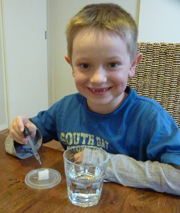
Sugar Landscape
Use a sugar cube to explore how rain changes our landscape
Suitable for kids aged 4+
You Need:
- Sugar cube
- Eyedropper or pipette
- Small plastic lid (or saucer) to sit the sugar cube on
What to do:
- Practice using the eyedropper by sucking-up some cold tap water from a glass (or other container), then gently squeezing the water back into the glass one drop at a time. Dont squeeze too hard or the water will come squirting out as one stream. You need to be able to master raining one drop at a time to continue with the rest of the experiment.
- Place the sugar cube on a small dish. Call it Mount Everest if you it is on its side, or Indian High Plateau if it is lying flatter.
- Squeeze 5 drops of water onto the centre of the sugar cube using the eyedropper. Watch for any changes, even very subtle ones.
- Now rain 10 drops of water onto the cube. Do you notice anything?
- Rain a total of about 50 water drops on the sugar cube in lots of 10. Watching carefully all the time for changes to the sugar cube.
- If a puddle has developed on the dish, taste this ocean water. What does it taste like?
Why is it so?
As you rain water on the sugar cube with the eyedropper, the sugar landscape begins to change. Holes form, sugar dissolves and the cube begins to collapse. Real rain has the same effect on our landscape. It shapes valleys, mountains and hills, and constantly changes the landscape. Rain water dissolves and leeches small amounts of salt from rocks and soil as it moves through the land, carrying these salts into the oceans. This is how the oceans became salty over millions of years concentrated by evaporation of pure water. Just as the tiny ocean in this experiment became sugary as sugar dissolved and was carried by the rain drops. Yummy!
Recent Posts



Showcased Product
Snap Circuit My Home
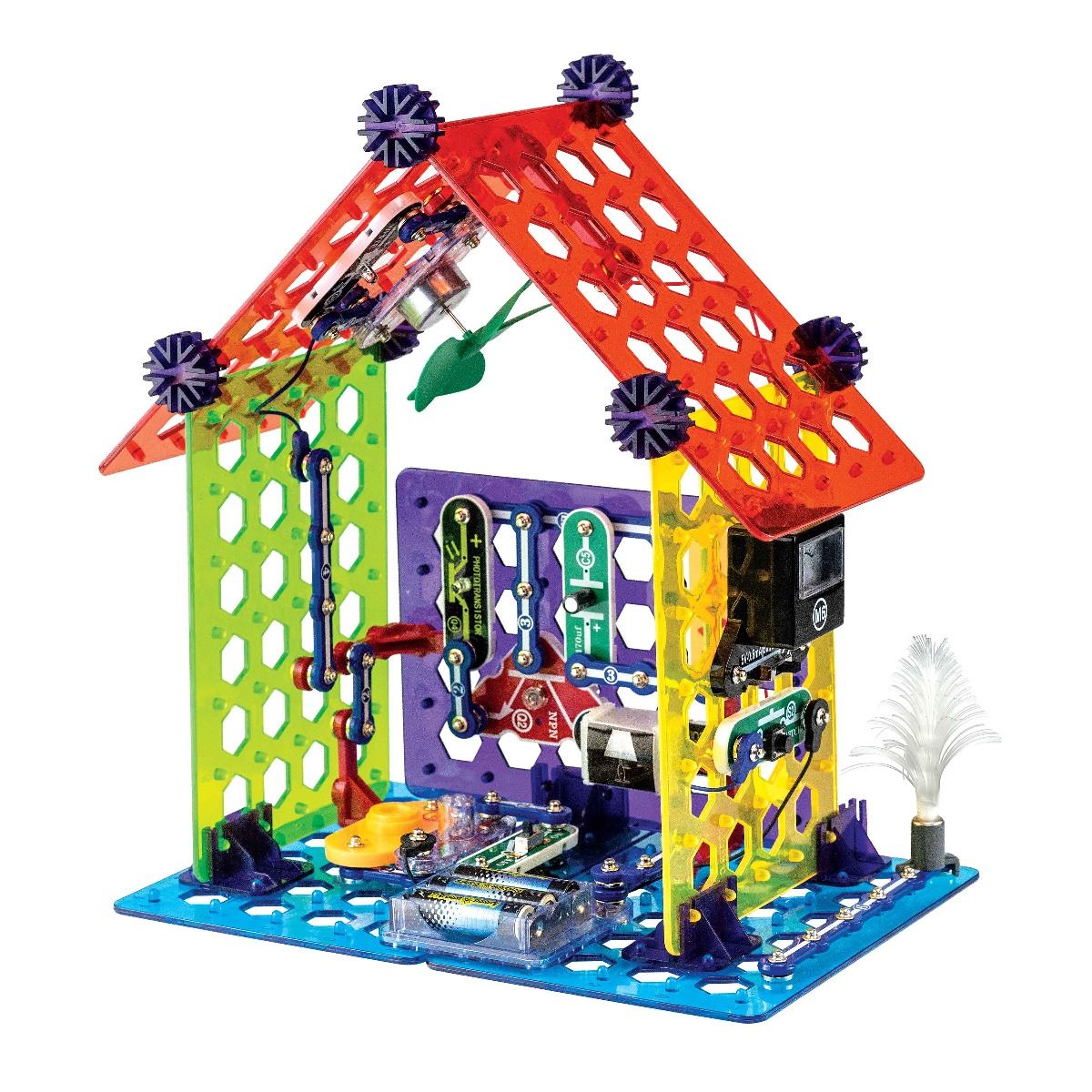
Learn about circuitry, security systems, dimmer switches, automatic lights, alarms, motion detectors, fan speeds, appliance motors, generators, and much more!