
Conductive Play-Dough
July 26, 2017

Replace wires with play dough and circuit building becomes a snack for tiny learners. Watch them figure it all out and you'll see their little faces light up! up
Suitable for kids aged 5+ with the help of an adult
For Conductive Play-Dough You Will Need:
- 1 cup Water
- 1 1/2 cups Flour
- 1/4 cup Salt
- 3 Tbsp. Cream of Tartar (or 9 tablespoons of lemon juice)
- 1 Tbsp. Vegetable Oil
- Food Coloring (optional)

For Circuit You Will Need:
- battery pack
- batteries
- light emitting diodes/LEDS

How to make homemade conductive play-dough:
Remember - always ask an adult for help when using the stove.
- Mix water, 1 cup of flour, salt, cream of tartar, vegetable oil, and food coloring in a medium sized pot.
- Cook over medium heat and stir continuously. Will boil and get chunky.
- Keep stirring the mixture until it forms a ball in the center of the pot.
- Once a ball forms, place the ball on a lightly floured surface. Let cool before kneading.
- Slowly knead the remaining flour into the ball until youve reached a desired consistency.
- Store in an airtight container or plastic bag. If stored properly, the dough should keep for several weeks.
- What happens? You should see the ashes of the teabag fly into the air!
How to make a simple circuit:
Remember - always ask an adult for help when working with electricity.
- Make two lumps of ordinary conducting play dough and poke one of the battery pack leads into each lump.
- Now poke one of your LEDs legs into each lump.
- Electricity only flows through LEDs in one direction so, if the LED doesn't light up, take it out, turn it around and poke the legs back into the lumps.
- Once you have all the materials, let the kids sculpt, play and create! Use this activity to talk about electricity and how conductive materials allow it to flow freely.
- Experiment with series and parallel circuits and rolling play-dough into conductive wires.
Why is it so?
Electricity flows in a loop or circle, called a circuit. The circuit must be made of a conductive material (like metal), as this type of material allows for charges to flow through it easily.
A circuit starts and stops at the battery pack, and flows through wires, conductive dough, and electrical components such as LEDs. When the circuit is broken, charges will stop flowing, and LED light will switch off.
Play-dough allows charges to flow through it easily as it is very salty. Salty water conducts electricity, which makes ordinary, salty play dough a reasonably good conductor.
A circuit starts and stops at the battery pack, and flows through wires, conductive dough, and electrical components such as LEDs. When the circuit is broken, charges will stop flowing, and LED light will switch off.
Play-dough allows charges to flow through it easily as it is very salty. Salty water conducts electricity, which makes ordinary, salty play dough a reasonably good conductor.

Do more cool experiments with the science kits available on this website.
Recent Posts



Showcased Product
Snap Circuit My Home
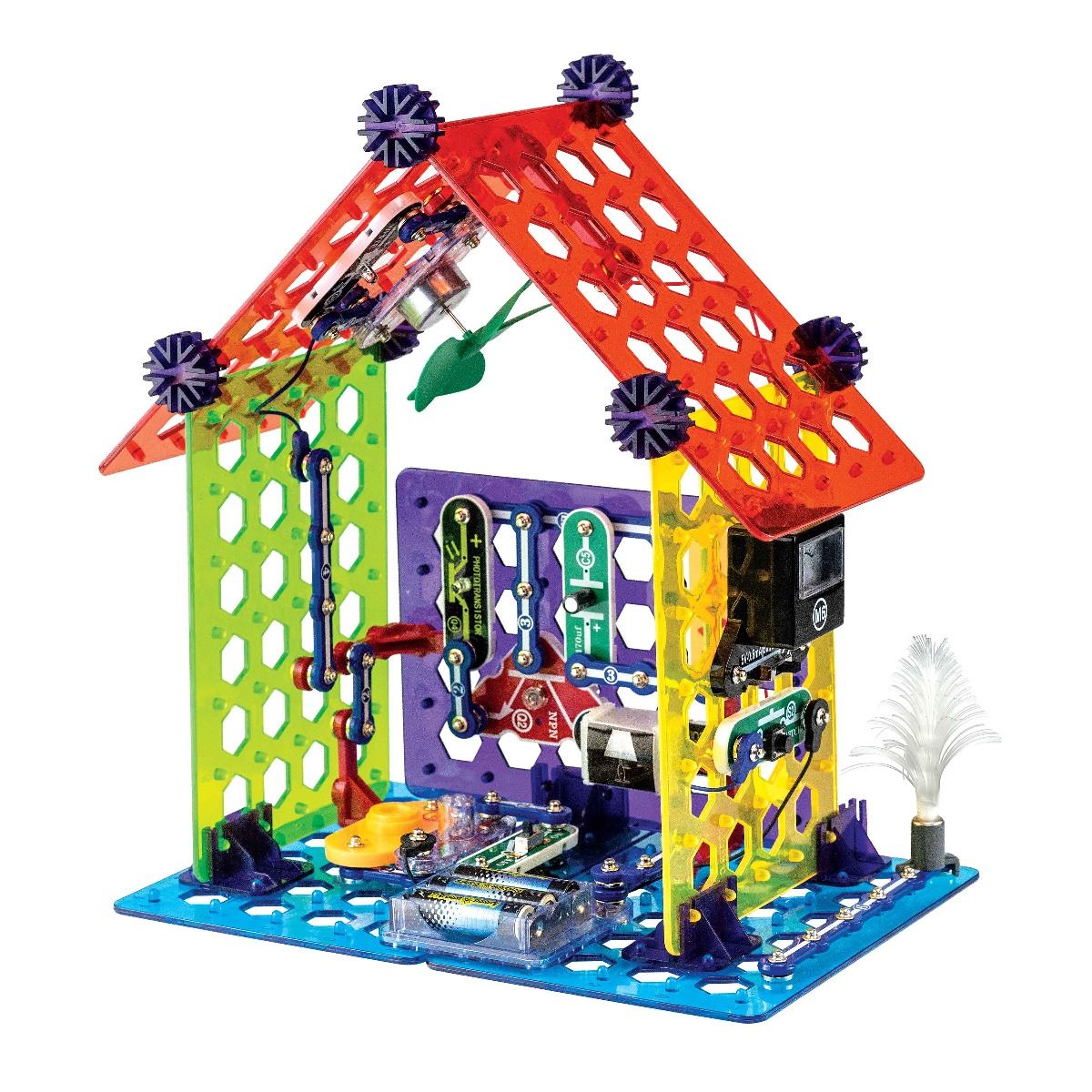
Learn about circuitry, security systems, dimmer switches, automatic lights, alarms, motion detectors, fan speeds, appliance motors, generators, and much more!